Written by: Her Clinic Doctor Team | Medically Reviewed by: Dr. Jeff Khor (LCP, MMC No. 66113)
Dealing with acne is tough, but the “souvenirs” it leaves behind can be even more frustrating. In Malaysia’s humid climate, managing skin texture is a common struggle. This guide breaks down how to navigate the best clinical solutions available locally to reclaim your skin’s smooth finish.
Her Clinic, doctor-led aesthetic clinic in Malaysia offers advanced Acne Scar Treatment to reduce scars, improve skin texture, and support clearer skin with personalized solutions designed for safe, effective, and lasting results.

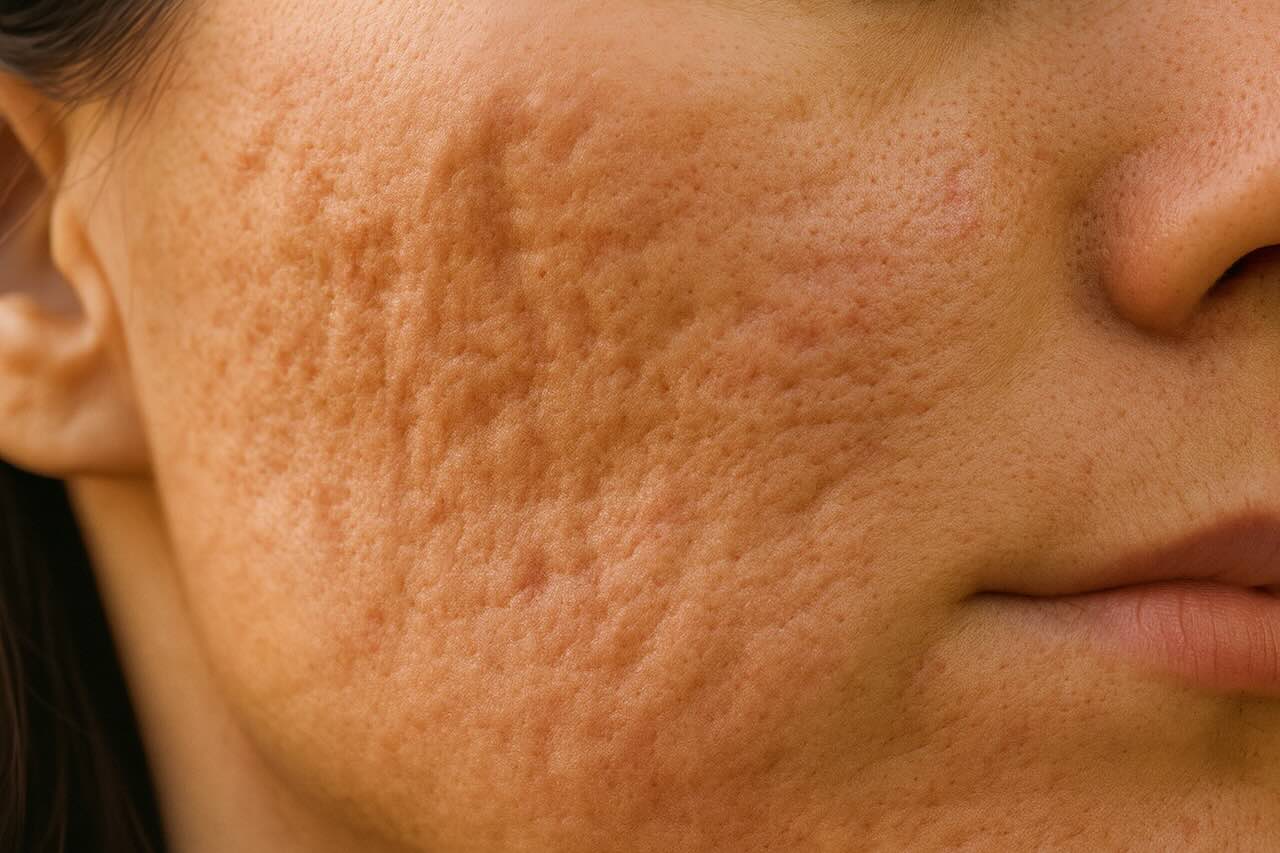
Acne scars are permanent textural changes resulting from inflamed acne lesions that damage collagen. Types include atrophic (ice pick, boxcar, rolling) and hypertrophic scars. Treatment options include laser resurfacing, microneedling, chemical peels, and subcision to stimulate collagen remodeling and improve skin smoothness.
Scars form when the body produces too much or too little collagen during the wound-healing process. If the inflammation is deep—common with cystic acne—it destroys the underlying tissue. Without professional help, the skin cannot naturally “fill” these gaps, leading to permanent indentations or raised bumps.
Ice Pick: Deep, narrow pits.
Boxcar: Broad depressions with sharp edges.
Rolling: Shallow, wave-like undulations.
Hypertrophic: Raised, thick lumps (common on the jawline).
Identifying your specific type is crucial, as each requires a different dermatological approach for scar remodeling.
Post-Inflammatory Hyperpigmentation (PIH) consists of flat, brown, or red marks left after a pimple. These are not true scars; they are pigment changes. While PIH eventually fades with topical brighteners, true scars involve physical changes in skin depth that topical creams cannot fix.
Generally, yes. While some minor remodeling occurs over years, deep atrophic scars will not vanish on their own. Because our skin loses collagen as we age, scars often become more visible over time. Early intervention is the best way to maintain a youthful, even complexion.
Choosing a treatment isn’t one-size-fits-all. Your skin type, budget, and downtime capacity dictate the best path. In Malaysia, we must also consider the heat, as post-laser sun exposure can lead to complications if not managed correctly by a professional.
Mild scarring (Grade 1-2) often responds well to chemical peels or light microneedling. Severe, “pitted” scars (Grade 4) usually require aggressive Fractional CO2 laser therapy or subcision to break the tethered fibers holding the skin down.
Most Malaysians fall into Fitzpatrick types III to V. We are more prone to Post-Inflammatory Hyperpigmentation (PIH) from heat-based lasers. For our skin, “cold” lasers like Picosecond technology or RF microneedling are often safer alternatives to traditional high-heat ablative lasers.
Oily skin might benefit from lasers that also shrink sebaceous glands. Sensitive skin types should avoid aggressive peels and opt for soothing treatments like PDRN (Salmon DNA) injections to speed up healing. Always disclose your skin’s reactivity to your doctor during the initial assessment.
Before committing, ask: “Which scar type am I treating?” “What is the expected downtime?” and “What is the risk of PIH for my skin tone?” Ensure you understand the total sessions needed. A transparent doctor will provide a realistic roadmap rather than promising 100% removal.

Malaysia is a hub for medical tourism, offering world-class aesthetic technology. From lasers to manual subcision, the options are vast. Most clinics now favor a “multi-modality” approach to target different scar depths in a single session for better results.
Fractional CO2 creates micro-injuries to trigger collagen, though it requires 5–7 days of downtime. Picosecond lasers use ultra-short pulses to shatter pigment and stimulate remodeling with minimal heat. Picosure or Discovery Pico are popular choices in KL for faster recovery.
Traditional microneedling uses tiny needles to create controlled trauma. This “wakes up” your skin’s repair mechanism. It’s effective for general texture and is often more affordable than lasers. However, it usually takes more sessions to see the same results as high-tech energy devices.
These devices combine needles with RF energy. SYLFIRM X is excellent for Malaysian skin as it targets both scars and redness (vascularity). Morpheus8 goes deeper, making it a powerhouse for severe boxcar scars and skin tightening simultaneously.
Professional-grade TCA (Trichloroacetic Acid) peels or the “TCA Cross” method are used for ice pick scars. The acid is placed precisely into the pit to trigger “filling.” It’s a cost-effective method but requires a skilled hand to avoid widening the scar.
For rolling scars, a needle is inserted under the skin to “cut” the fibrous bands pulling the surface down. This releases the skin, allowing it to lift. It is often paired with fillers or Rejuran to keep the area from re-tethering.
Hyaluronic Acid fillers provide immediate gratification. They are injected directly into deep depressions to “plump” the skin. While results are instant, they are temporary (lasting 6–12 months). They are perfect for “polishing” the skin surface after laser treatments.
Platelet-Rich Plasma (PRP) uses your own blood to harvest growth factors. When injected or applied after microneedling, it dramatically accelerates healing. In Malaysia, this is a popular “natural” add-on to boost the efficacy of energy-based treatments.
Most people have a mix of ice pick, boxcar, and rolling scars. A single laser won’t fix everything. A “Gold Standard” plan might include subcision for lifting, CO2 for texture, and Pico Laser Treatment for pigment. Multi-layered treatment is the secret to significant improvement.
Cost varies by location and technology. Generally, Kuala Lumpur clinics charge more due to overheads, while Penang and JB offer competitive rates. Always verify if the price quoted includes consultation, numbing cream, and post-procedure recovery skincare.
Expect to pay between RM 800 to RM 2,500 per session for Fractional CO2 or Picosecond lasers. Many clinics offer packages of 3 to 5 sessions at a 15–20% discount. High-end machines like the Lutronic PicoPlus often command a premium price.
Microneedling usually ranges from RM 400 to RM 900. Chemical peels are the most budget-friendly, starting at RM 250. Prices are relatively stable across major Malaysian cities, though “boutique” clinics in Bangsar or Mont Kiara may lean toward the higher end.
Government hospitals like HKL offer dermatology services for a fraction of the cost (RM 50–RM 200), but waitlists are long. Private clinics provide faster access, the latest technology, and a more comfortable experience, albeit at a significantly higher price point.
Most patients require 3 to 6 sessions for visible 50–70% improvement. A full transformation journey can cost anywhere from RM 3,000 to RM 10,000 over a year. Think of it as an investment in your long-term confidence and skin health.
Finding a reputable clinic is vital for safety. In Malaysia, look for clinics registered with the Ministry of Health (MOH) and doctors with an LCP (Letter of Credentialing and Privileging) to ensure they are qualified to perform aesthetic procedures.
Check for transparent pricing, genuine “before and after” photos of actual patients, and clean, medical-grade facilities. A good clinic won’t “hard sell” you. They should offer a thorough skin analysis using devices like VISIA to map your scar depth.
You can verify a doctor’s registration on the National Specialist Register (NSR) Malaysia website. For aesthetic doctors, ensure they hold a valid LCP. This guarantees they have undergone the necessary training and follow national safety standards for laser usage.
For those on a budget, Hospital Kuala Lumpur (HKL) and Pusat Perubatan Universiti Malaya (PPUM) have excellent dermatology departments. You typically need a referral from a GP (Klinik Kesihatan) to access these subsidized specialist services.
Understanding the process reduces anxiety. Most treatments are outpatient procedures that take less than an hour. However, the “work” really happens during the recovery phase, where your skin is rebuilding its structure from the inside out.
Stop using Retinoids, AHAs, and BHAs at least 5 days before treatment. Avoid intense sun exposure or tanning. If you are prone to cold sores, inform your doctor; they may prescribe anti-viral medication, as lasers can sometimes trigger a breakout.
First, a topical numbing cream is applied for 30–45 minutes. During the laser or microneedling, you’ll feel a snapping or “prickly” sensation. Most modern machines have cooling systems to manage discomfort. The actual procedure usually lasts only 15 to 20 minutes.
Expect redness and swelling (like a sunburn) for 2–3 days. For CO2 lasers, tiny scabs (mends) will form and flake off within a week. Do not pick them! Picking scabs leads to scarring or darkening, defeating the purpose of the treatment.
Sunscreen is non-negotiable! Use an SPF 50+ PA++++ daily. Stay indoors during peak hours (11 am – 4 pm). Use a gentle, ceramide-rich moisturizer to repair the skin barrier. Avoid sweating or heavy gym sessions for the first 48 hours to prevent irritation.
Collagen takes time to grow. While you might see a “glow” after a week, real scar improvement usually appears 8 to 12 weeks after the first session. Maximum results are typically seen three months after your final session in a treatment series.
Home care is excellent for maintenance, but it has limits. Over-the-counter (OTC) products work on the surface (epidermis), whereas acne scars are a dermal issue. You can’t “cream away” a deep hole in the skin, but you can improve its appearance.
Vitamin C brightens PIH, while Retinol encourages cell turnover and minor collagen production. AHA (Glycolic Acid) helps smooth the very top layer. These are best for “Grade 1” scarring or as prep-work before you undergo professional clinical treatments.
Local brands like Kayman Beauty, Tatagaltier, and Skintific (wildly popular in MY) offer great barrier-repair products. Look for their centella asiatica or ceramide serums. Supporting local while healing your skin is a win-win for the Malaysian ecosystem!
If your scars are indented (pitted), feel “tethered” when you smile, or if you have raised keloids, home remedies will fail. If you’ve used Retinol for six months with no change in texture, it’s time to consult a pro for clinical-grade intervention.
Different life stages and body parts require tailored approaches. What works for a teenager’s fresh scars might not be suitable for a woman who is breastfeeding or a man with thicker, more sebaceous skin.
For teens, the priority is stopping active acne first. Once clear, gentle peels or light microneedling are preferred. It’s important to establish a strict sunscreen habit early, as young skin heals fast but is very susceptible to UV damage.
Breastfeeding moms should avoid certain lasers and high-strength Retinoids. Light-based therapies like LED or gentle Glycolic peels are generally safe. Always consult your OB-GYN and dermatologist to ensure the ingredients used won’t affect your baby.
Men generally have thicker skin and higher sebum levels. They often respond well to more aggressive Fractional CO2 settings. Since many men skip complex skincare, a “one-and-done” approach like RF Microneedling is often a popular, low-maintenance choice for the guys.
“Bacne” scars are common in our humid weather. The skin on the back is thicker and heals differently than the face. Chemical peels and specialized body lasers work well here. Since the area is usually covered, patients can often opt for more aggressive treatments.
There isn’t one “best” treatment. However, Combination Therapy (e.g., Subcision + Pico Laser + Rejuran) is widely considered the gold standard for achieving the most dramatic results in the fewest sessions for the diverse scar types found in most patients.
Most people see a noticeable change after 2 sessions, but a full course of 4 to 6 sessions is standard for significant remodeling. Patience is key; collagen synthesis is a slow biological process that shouldn’t be rushed.
With medical-grade numbing cream, most treatments are a 2/10 or 3/10 on the pain scale. You might feel heat or a light “stapler” sensation. Doctors can also provide local anesthesia (nerve blocks) for more invasive procedures like deep subcision.
“Removal” is a strong word. Expect 50% to 80% improvement. While we can’t give you “baby skin” if scars are deep, we can make them invisible in normal lighting and significantly smoother to the touch.
Look for “Physical” sunscreens containing Zinc Oxide or Titanium Dioxide, as they are less irritating. Brands like Heliocare or La Roche-Posay are highly recommended by Malaysian dermatologists for post-procedure care to prevent PIH.
Yes, as long as they have an MOH license. Avoid “beauty salons” offering lasers or injections; these are illegal and dangerous. Always check for the LCP certificate displayed in the clinic’s waiting area.

Ready to start your journey? The first step is a professional consultation. Most Malaysian clinics offer digital bookings via WhatsApp or their website, making it easier than ever to get a quote and a skin analysis.
Use the “Find a Doctor” tool on the NSR website or search for LCP-certified clinics in your specific neighborhood (e.g., “LCP Aesthetic Clinic Subang Jaya”). Read Google reviews specifically looking for “acne scar” feedback from previous patients.
Bring a list of your current skincare products and any oral medications (like Isotretinoin/Accutane) you’ve taken. If you have photos of your skin at its worst, show them to the doctor—it helps them understand your acne history.
Many clinics now offer Tele-Dermatology via Zoom or WhatsApp video. While an in-person feel is best for texture, a virtual chat can help determine if you’re a candidate for treatment and provide a rough cost estimate before you travel.
Medical Disclaimer: This content is for educational purposes and is not medical advice. Per Ministry of Health Malaysia standards, all aesthetic treatments must be performed by LCP-certified physicians. Results vary by individual. Always consult a qualified professional, such as the team at Her Clinic, for a medical diagnosis and a treatment plan tailored to your needs.