
Dealing with acne is one thing, but the “souvenirs” it leaves behind—those stubborn pits and craters—can be a real hit to your confidence. If you’ve been scrolling through Malaysian skincare forums looking for a solution that actually works for deep scarring, you’ve likely bumped into the term subcision.
What is Subcision?

Definition and Purpose of Subcision
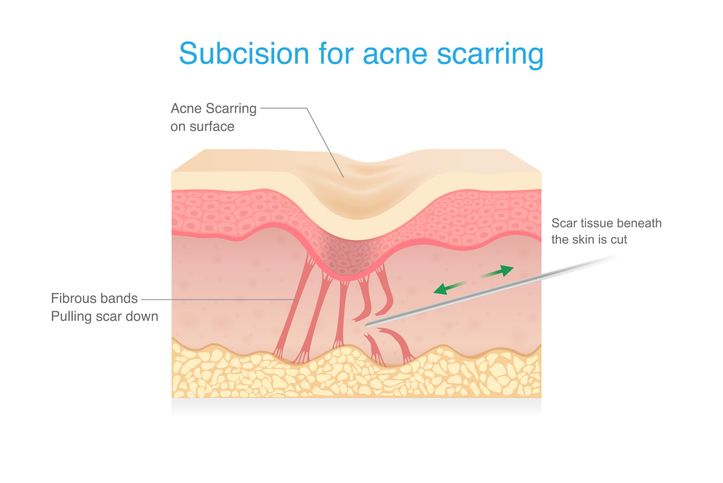
Subcision is a minor surgical procedure for treating depressed acne scars. A specialized needle is inserted under the scar to release fibrotic tethers that pull skin downward. This releases the scar, allowing it to lift. Collagen remodeling follows, smoothing the skin. Often combined with microneedling or fillers for optimal results.
How Subcision Works as Acne Scar Treatment
Think of a depressed scar like a tent being pulled down by a tight rope. No matter how much “paint” (creams) or “sanding” (exfoliation) you do on the surface, that rope is still pulling. During subcision, a dermatologist inserts a small needle under the scar to cut those “ropes.” This releases the skin, allowing it to lift. According to the American Academy of Dermatology, this process also triggers your body’s natural wound-healing response, stimulating collagen production to fill the gap.
Benefits of Subcision for Malaysian Skin Types
Improvement of Rolling and Depressed Scars
Subcision is the “gold standard” for rolling scars—those wide depressions that have rounded edges. Because these scars are caused by internal tethering, subcision provides an immediate lift that topical treatments just can’t match.
Minimal Downtime and Natural Results
In our busy cities like KL or Penang, nobody has weeks to hide away. Subcision is relatively quick. While you might see some bruising (like a “hickey” under the skin), you can usually get back to your routine within a few days. The results look natural because it’s your own collagen doing the heavy lifting.
Suitable for Fitzpatrick III–V Skin
This is a big win for Malaysians! Many of us fall into the Fitzpatrick III to V skin type category, which means we are at a higher risk of hyperpigmentation from aggressive lasers. Subcision carries a much lower risk of Post-Inflammatory Hyperpigmentation (PIH) because it doesn’t use heat or damage the top layer of the skin.
Subcision Procedure: Step-by-Step
Pre-Treatment Consultation and Assessment
Your doctor will map out your face, often using “side-lighting” to identify exactly which scars are tethered. This is the time to discuss your medical history and any medications you’re on.
The Subcision Technique Explained
Numbing: A local anesthetic is injected to make the area numb.
Insertion: A specialized needle (like a Nokor needle) or a blunt cannula is inserted.
The “Fanning” Motion: The doctor moves the needle back and forth in a fan shape to break the scar tissue. You might hear a “snapping” sound—don’t panic! That’s just the fibrous bands releasing.
Post-Treatment Care and Recovery Tips
Ice it up: Use a cold compress for the first 24 hours to keep swelling down.
Keep it clean: Use a gentle cleanser and avoid heavy makeup for 48 hours.
Sun protection: Always wear SPF 50+. Even though subcision is “under the skin,” your skin is still in healing mode.
Subcision Cost in Malaysia
Average Prices by Clinic and City
In Malaysia, the cost is quite competitive compared to Singapore or Australia. On average, you can expect to pay anywhere from RM 300 to RM 800 per session, depending on the size of the area treated.
Factors Affecting Treatment Cost
Clinic Location: Bangsar or Mont Kiara clinics might charge a premium compared to those in Ipoh or Melaka.
Doctor’s Expertise: A senior consultant dermatologist will likely cost more than a general aesthetic physician.
Combination Packages: Most people need 3–6 sessions for best results, and clinics often offer discounts for packages.
Subcision Before and After: Real Malaysian Cases
Patient Case Studies
Most Malaysian patients report a “softening” of their features after just one session. By the third session, the “shadows” cast by rolling scars in harsh lighting are significantly reduced.
Visible Results Timeline
Week 1: Swelling and bruising fade.
Month 1-3: This is the “sweet spot” where your body starts building new collagen.
Month 6: Final results are usually visible.
Risks, Side Effects, and Safety Considerations
Common Side Effects
You should expect some temporary bruising, swelling, and slight tenderness. In some cases, small bumps (granulomas) can form, but these are rare and usually treatable.
How to Minimize Risks
The best way to stay safe is to choose an LCP-certified (Letter of Credentialing and Privileging) doctor. You can verify medical practitioners through the Malaysian Medical Council to ensure they are licensed to perform aesthetic procedures.
Combining Subcision with Other Treatments
PRP, Microneedling, and Laser Therapy
Subcision is like clearing the foundation; now you need to polish the surface. Many Malaysian clinics combine subcision with Platelet-Rich Plasma (PRP) to speed up healing. Adding Fractional CO2 Laser after subcision can help smooth out the surface texture.
Maximizing Results Safely
When you combine treatments, you’re tackling the scar from every angle. This “multimodal” approach is generally more effective than doing ten sessions of just one treatment.

Choosing the Right Clinic in Malaysia
Key Qualifications of a Subcision Specialist
Don’t be afraid to ask questions! Ensure your doctor is experienced with your specific skin type and has a portfolio of acne scar treatments they’ve performed successfully.
Tips for a Safe and Effective Treatment
Check Reviews: Look for honest feedback on Google or local beauty groups.
Consultation is Key: If a clinic pushes you into a treatment without explaining the risks, walk away.
Follow the Aftercare: Your results depend 50% on the doctor and 50% on how you treat your skin at home.
Her Clinic Malaysia offers expert subcision treatments to safely improve acne scars, delivering natural, lasting results for all Malaysian skin types with minimal downtime.
