

Types of Thread Lift: PDO, PLLA, PCL & Key Differences
Navigating the world of non-surgical facelifts can feel like alphabet soup. Between PDO, PLLA, and PCL, choosing the right “thread” is vital for achieving that snatched jawline or subtle brow lift. In 2026, these bio-absorbable sutures are the gold standard for lifting sagging skin without the downtime of surgery.
What Is a Thread Lift?
A thread lift is a minimally invasive procedure designed to lift and tighten sagging facial tissues. Often called the “lunchtime lift,” it uses specialized medical-grade sutures to reposition skin. In Malaysia, these procedures must be performed by LCP-certified aesthetic physicians to ensure patient safety and clinical excellence.
How Thread Lift Works
The process involves inserting thin threads into the subcutaneous layer of the skin. Once anchored, the threads act as a scaffold, physically lifting the tissue. Simultaneously, they trigger a “foreign body response,” stimulating the natural production of Type I and Type III collagen to improve skin elasticity and thickness over time.
Types of Thread Lift Explained
Not all threads are created equal. The “type” refers to the chemical polymer used to make the suture. Each material has a different absorption rate, tensile strength, and level of collagen stimulation. Choosing between them depends on your age, skin laxity, and desired duration of the lifting effect.
PDO Thread Lift
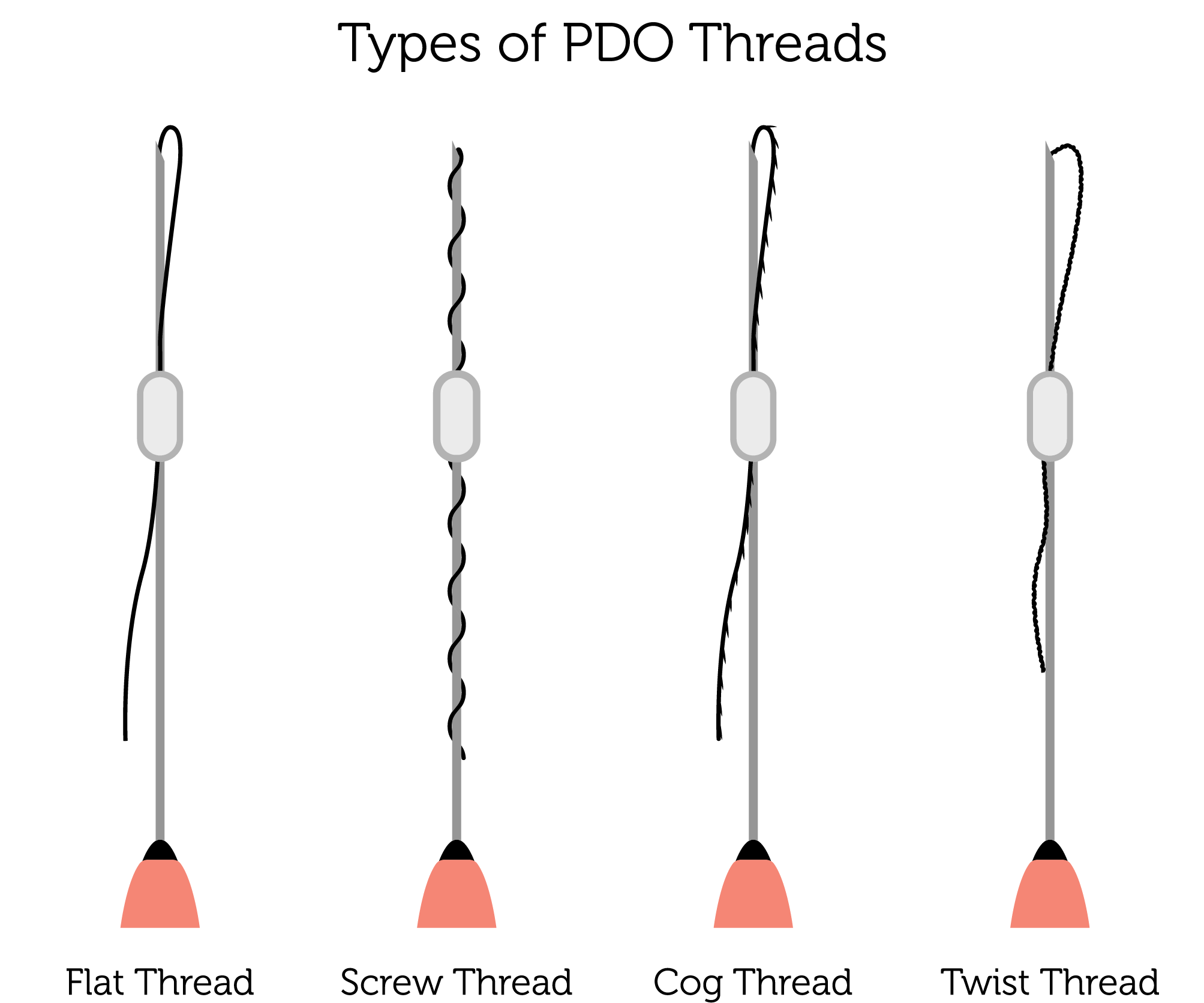
Polydioxanone (PDO) threads are the most common and have been used in cardiovascular surgery for decades. They are highly versatile and come in three forms: mono (smooth), screw (twisted), and cog (barbed). They are excellent for fine lines and moderate lifting, typically dissolving within six months via hydrolysis.
PLLA Thread Lift
Poly-L-Lactic Acid (PLLA) threads are powerful volumizers. Made from the same material as Sculptra aesthetic injections, they are biocompatible and biodegradable. PLLA threads are specifically designed to act as a chemical stimulant, significantly boosting collagen production compared to traditional PDO options for a more youthful “plumping” effect.
PCL Thread Lift
Polycaprolactone (PCL) is the newest generation of thread material. These threads are known for their extreme durability and flexibility. Because the chemical bonds in PCL are stronger, they take much longer for the body to break down, providing a sustained lift and continuous collagen synthesis for a longer period.
Differences Between Thread Lift Types
Understanding the nuances between these materials helps set realistic expectations for your transformation. While all three promote “neocollagenesis,” their chemical structures dictate how they interact with your skin’s biology. This comparison table highlights the technical specs of each polymer used in modern aesthetic medicine.
| Feature | PDO (Polydioxanone) | PLLA (Poly-L-Lactic Acid) | PCL (Polycaprolactone) |
| Primary Benefit | Instant Lift & Skin Quality | High Collagen Stimulation | Long-term Structural Support |
| Flexibility | Moderate | Lower (Stiffer) | Very High |
| Absorption Time | 6 Months | 12–18 Months | 18–24 Months |
| Best For | Beginners / Fine Lines | Volume Loss / Mature Skin | Severe Sagging / Longevity |
Material Composition
PDO is a synthetic monofilament that dissolves quickly. PLLA is an alpha-hydroxy acid polymer that is stiffer but highly bioactive. PCL is a complex polyester with a slow degradation rate. According to research in the Journal of Cosmetic Dermatology, PCL offers the highest tensile strength and tissue integration.
Longevity
Longevity is the biggest differentiator. PDO threads disappear the fastest, usually within 180 days. PLLA lasts about a year. PCL is the marathon runner, remaining in the tissue for up to two years. However, the “lift” often outlasts the thread itself due to the new collagen framework left behind.
Results and Effectiveness
PDO provides the most immediate “tight” feeling but has a shorter peak. PLLA offers a gradual improvement in skin density and volume over 3 months. PCL delivers a balance of both: a strong initial mechanical lift combined with the longest-lasting structural improvement to the skin’s basement membrane.
Which Type of Thread Lift Is Best?
The “best” thread depends on your specific “aging phenotype.” Younger patients might only need PDO for preventative maintenance, while those with significant mid-face sagging often require the heavy-duty lifting power of PCL or the volumizing properties of PLLA to achieve a harmonious, natural-looking facial rejuvenation.
Best Type for Skin Lifting
For a significant “mechanical” lift—like sharping the jawline or lifting heavy jowls—PCL cogs are superior. Their flexibility allows them to move naturally with facial expressions without snapping, making them ideal for areas with high movement. They provide the strongest anchor against gravity’s effects on the skin.
Best Type for Collagen Stimulation
PLLA is the undisputed king of collagen. If your skin feels thin, crepey, or “hollow,” PLLA threads act like a slow-release fertilizer for your fibroblasts. They are best for patients who want to improve skin quality and thickness rather than just pulling the skin tighter.
Choosing the Right Thread Type
Your doctor will evaluate your skin thickness. Thick skin requires stronger, barbed PCL threads to stay lifted. Thinner skin might benefit from PDO Mono threads to thicken the dermis without being visible. Always ensure the threads used are MDA-registered medical devices to guarantee material purity and safety.
Results of Different Thread Lift Types
Regardless of the type, thread lifts offer “dual-phase” results. You get an immediate mechanical lift from the physical anchoring, followed by a secondary biological improvement as the threads dissolve. This two-step process ensures that you look refreshed immediately but continue to improve as the months go by.
Results Timeline
Expect an immediate 20% lift right after the procedure. Over the next 2 to 12 weeks, the inflammatory response kicks in, and collagen begins to wrap around the threads. The “peak” result usually occurs around the 3-month mark when the skin appears most radiant and firm.
Expected Outcomes by Thread Type
PDO: Quick glow-up, better skin texture, subtle lifting.
PLLA: Noticeable improvement in facial volume and “bounce” after 8 weeks.
PCL: Defined contours and a durable lift that stays consistent for over a year.
Results are most effective for patients with mild to moderate laxity.
How Long Do Different Thread Lifts Last?
The “lifespan” of a thread lift is divided into two parts: how long the thread stays in your body and how long the aesthetic result remains visible. Even after the thread is gone, the collagen “tunnel” created remains, providing a residual lifting effect for several months.
PDO Longevity
PDO threads are fully absorbed within 6 months. The visible lifting results typically last between 9 to 12 months total. Many patients choose to have “maintenance” PDO threads inserted every 6 to 9 months to keep their collagen levels at an all-time high and prevent sagging.
PLLA Longevity
PLLA threads generally dissolve within 12 to 18 months. Because they are so effective at stimulating new tissue growth, the aesthetic improvements can last up to 2 years. They are a great middle-ground for patients who want durability without the permanence of surgery.
PCL Longevity
PCL is the longest-lasting option, with the material taking 18 to 24 months to be fully metabolized. The resulting lift can stay visible for 2 to 3 years. Due to this longevity, PCL is often the most cost-effective choice for patients looking for long-term facial contouring.
Safety and Side Effects by Thread Type
Thread lifts are safe when performed in a sterile environment by a trained professional. Complications are rare but usually related to the depth of insertion or the “gauge” of the thread. In Malaysia, strict Medical Device Authority (MDA) guidelines ensure that only high-quality, biocompatible polymers are used.
Common Side Effects
Most patients experience mild swelling, bruising, or a “tugging” sensation for 3–5 days. Temporary skin dimpling can occur if the thread is placed too superficially, but this usually resolves within a week. Avoid vigorous exercise or dental work for 14 days post-procedure to prevent thread displacement.
Risks by Thread Type
PLLA threads are stiffer, so they carry a slightly higher risk of being “felt” under thin skin if not placed deep enough. PDO and PCL are more forgiving due to their flexibility. The rarest risk is infection or thread extrusion, which requires immediate medical attention and potential thread removal.
Types of Thread Lift FAQs
Which thread lift lasts the longest?
PCL (Polycaprolactone) threads last the longest, both in terms of material presence (up to 24 months) and visible results (up to 3 years). Their slow degradation makes them the premium choice for long-term lifting and sustained collagen synthesis compared to PDO or PLLA alternatives.
Which thread type is safest?
All three materials—PDO, PLLA, and PCL—are considered exceptionally safe and are FDA-cleared for medical use. PDO has the longest track record in surgery, making it the most studied. However, safety depends more on the doctor’s technique and the sterility of the clinic than the polymer itself.
Which thread lift is most effective?
Effectiveness depends on your goal. PCL is most effective for heavy lifting and jawline definition. PLLA is most effective for replacing lost volume and thickening the skin. PDO is most effective for fine-tuning skin texture and providing a quick, low-downtime refresh for younger patients.
Can different thread types be combined?
Yes! “Combination threading” is common in 2026. A doctor might use PCL Cog threads to lift the mid-face while placing PDO Mono threads around the eyes to treat fine lines. This tailored approach addresses multiple signs of aging in a single session for more holistic results.
