
Dealing with post-breakout skin can feel like an uphill battle, especially in Malaysia’s tropical climate where heat and humidity can make skin recovery feel sluggish. If you’ve been searching for a way to smooth out those stubborn indents or dark marks, you’re likely swimming in a sea of questions.
From ice pick craters to rolling valleys, we’ve rounded up the most-asked FAQs to help you navigate the world of acne scar revision in KL and beyond.
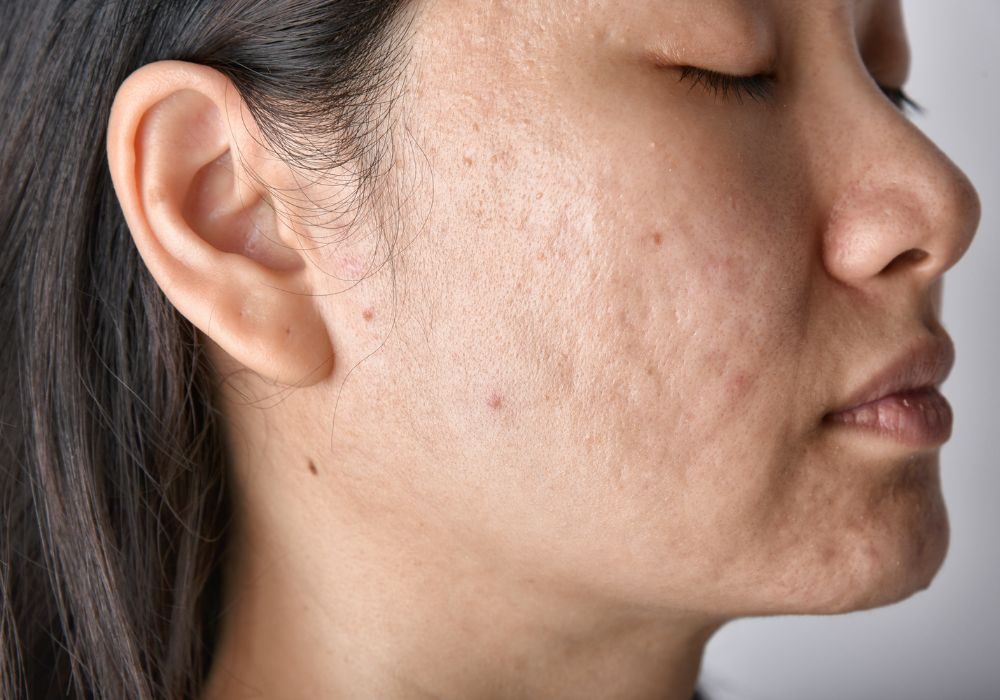
General Questions About Acne Scars
What Causes Acne Scars?
Scars are essentially the “battle scars” left behind by deep inflammation. When a pimple, cyst, or nodule bursts or is squeezed, it damages the surrounding tissue. According to the NHS guidelines on acne complications, scarring occurs when the body fails to produce the exact amount of collagen needed to repair the wound—either too much (leading to raised scars) or too little (leading to pits).
What Are the Different Types of Acne Scars?
Not all scars are created equal! In Malaysia, we typically categorize them into:
Atrophic Scars (Depressed): These include deep Ice Pick scars, wide Boxcar scars, and undulating Rolling scars.
Hypertrophic/Keloid Scars (Raised): Common on the jawline and back, these are thick, firm bumps.
Pigmentation: Often confused with scars, these are PIH (dark spots) or PIE (red marks) that linger after the acne heals.
Can Acne Scars Heal Naturally?
Unfortunately, while pigmentation can fade over several months, true “pitted” scars involve structural damage to the dermis. These will not disappear on their own with just topical creams. Medical intervention is usually required to “rebuild” that lost collagen.
Questions About Acne Scar Treatment
What Are the Most Effective Treatments for Acne Scars?
The “gold standard” usually depends on your scar type. For deep pits, Fractional CO2 Lasers or Erbium YAG are highly effective. For rolling scars, Subcision (releasing the tethered scar tissue) paired with Dermal Fillers or Rejuran S is often the top choice.
How Long Does Each Treatment Take to Show Results?
Patience is key. While lasers might give you a “glow” in a week, collagen remodeling is a slow burn. According to clinical studies on laser resurfacing for acne scars, it typically takes 3 to 6 months to see the full structural improvement as new collagen matures.
Are Acne Scar Treatments Painful?
Most clinics use medical-grade numbing cream (topical lidocaine) for 30–45 minutes before the procedure. You might feel a “snapping” sensation or heat, but it is generally very tolerable.
Can Acne Scar Treatments Be Combined for Better Results?
Absolutely! Most LCP-certified doctors in Malaysia recommend a “Multi-Modality” approach. Combining Subcision (to lift) with Pico Laser (to resurface) and PRP (to speed up healing) often yields much better results than any single treatment alone.
Safety and Recovery FAQs
What Are the Common Side Effects of Acne Scar Treatments?
Temporary redness, swelling, and minor scabbing (especially with CO2 lasers) are normal. For those with darker skin tones, Post-Inflammatory Hyperpigmentation (PIH) is a risk, which is why choosing the right laser setting is crucial.
How Long Is the Recovery Time After Treatment?
Pico Laser: 1–3 days of mild redness.
Fractional CO2: 5–7 days of “grid-like” scabbing and peeling.
Subcision: 3–5 days of potential bruising.
How Can I Minimize Risks and Side Effects?
Sun protection is your best friend. In the Malaysian sun, treated skin is extremely vulnerable. Use a broad-spectrum SPF 50 daily and avoid active ingredients like Retinol for at least one week post-treatment.
Cost and Accessibility FAQs
How Much Do Acne Scar Treatments Cost in Malaysia?
Prices vary based on the tech and the clinic’s location. On average:
Chemical Peels: RM300 – RM800
Pico Laser: RM600 – RM1,500
Fractional CO2 Laser: RM1,200 – RM3,000
Subcision: RM1,000 – RM2,000
How Do I Choose a Qualified Dermatologist or Clinic?
In Malaysia, safety is paramount. Only visit clinics where the doctor holds a valid Letter of Credentialing and Privileging (LCP) from the Ministry of Health. You can verify a doctor’s registration through the Malaysian Medical Council (MMC) to ensure they are legally qualified to perform aesthetic procedures.
Pro Tip: Always ask for “Before & After” photos of patients with a similar skin tone to yours. This is the best way to gauge if the doctor understands how to treat Malaysian skin safely.
