

What Is Rejuran?
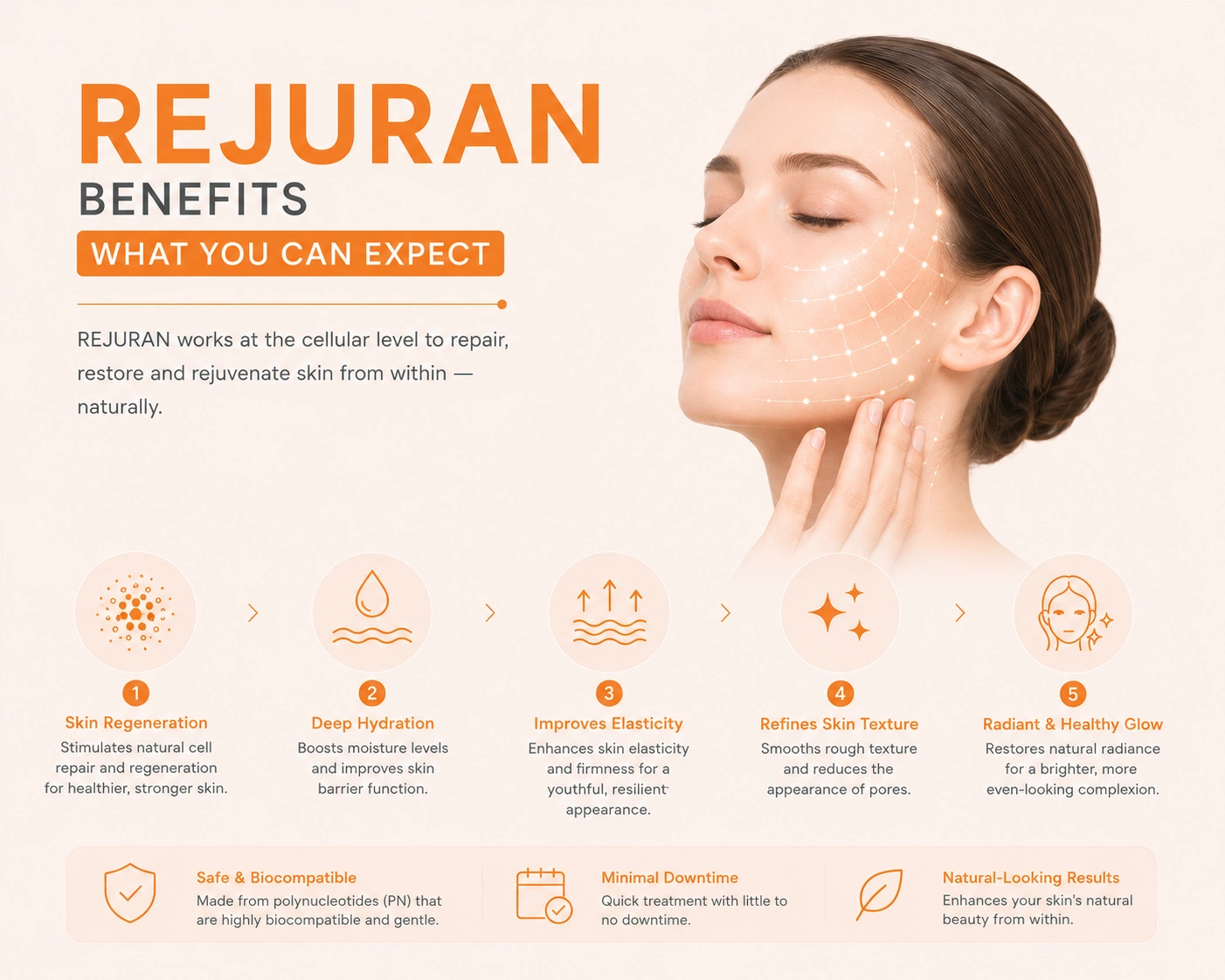
Rejuran is a skin booster injectable made from purified polynucleotides (PN) derived from salmon DNA. Unlike fillers that add volume or hyaluronic acid boosters that mainly hydrate, Rejuran works at a cellular level to repair damaged skin, stimulate collagen, and improve overall skin quality over time.
How Rejuran Works (Polynucleotides from Salmon DNA)
Once injected into the skin, polynucleotides act as a signal for fibroblasts — the cells responsible for producing collagen and elastin — to become more active. This encourages tissue repair, strengthens the skin barrier, and gradually improves texture, tone, and firmness rather than delivering an instant, temporary plump.
Why Salmon DNA Is Biocompatible with Human Skin
Salmon-derived DNA shares a similar structure to human DNA, which is why it’s well tolerated by the body with a low risk of allergic reaction. The polynucleotides are highly purified during manufacturing to remove proteins that could trigger sensitivity, making the treatment suitable for most skin types, including sensitive and acne-prone skin.
Rejuran vs Traditional Skin Boosters (PN vs Hyaluronic Acid)
Traditional skin boosters use hyaluronic acid (HA) to draw and hold moisture in the skin, giving a hydration boost that fades as the HA breaks down. Rejuran, on the other hand, focuses on regeneration — repairing the skin’s own collagen-producing machinery. Many clinics recommend comparing skin booster options side by side, since HA boosters and PN-based Rejuran suit different skin concerns and goals.
Types of Rejuran
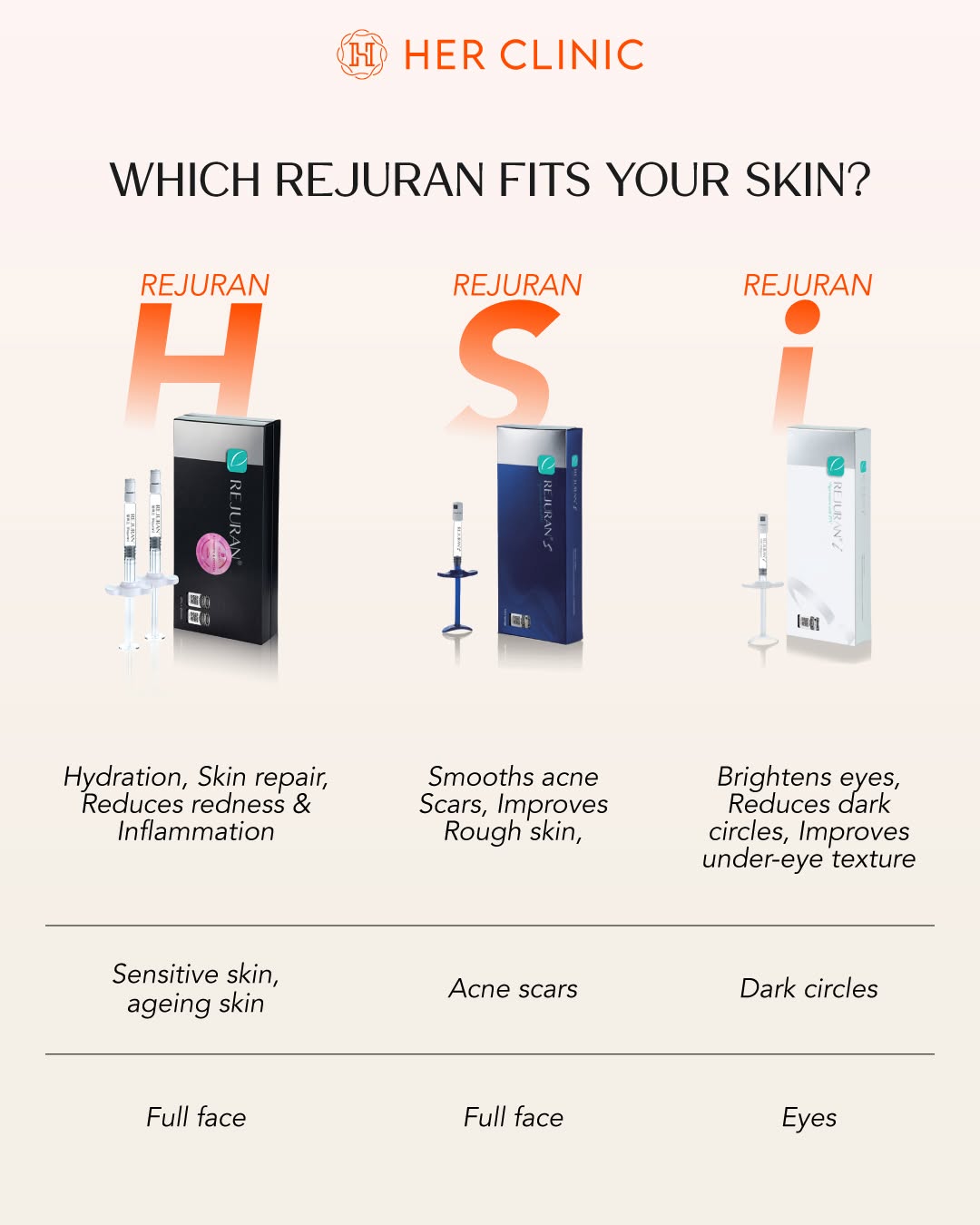
Rejuran isn’t a single formula — different variants are designed for different skin concerns and areas of the face.
Rejuran Healer — General Skin Rejuvenation
The original and most widely used formula, Rejuran Healer is designed for overall skin rejuvenation — improving texture, reducing fine lines, and restoring a healthy glow.
Rejuran S — Acne Scars
Rejuran S has a slightly different consistency, making it well suited for treating depressed acne scars and improving skin firmness around scarred areas.
Rejuran I — Under-Eye and Delicate Areas
Formulated specifically for thinner, more delicate skin, Rejuran I is commonly used to treat fine lines, dark circles, and puffiness around the eyes.
Rejuran HB — Hydration and Volume
Rejuran HB combines polynucleotides with hyaluronic acid, offering both regenerative and hydrating benefits in one formula, often used for areas that need extra volume support. For a full breakdown of each variant, see the different types of Rejuran.
Benefits of Rejuran
Cellular Repair, Not Just Surface Hydration
Because Rejuran works by stimulating the skin’s own repair processes, its effects go deeper than surface-level hydration, addressing the root cause of dull, damaged, or aging skin.
Improved Skin Firmness and Elasticity
Regular sessions help rebuild the collagen and elastin network, resulting in firmer, more resilient skin over time.
Reduced Fine Lines and Scarring
By encouraging tissue regeneration, Rejuran can soften fine lines and gradually improve the appearance of atrophic acne scars.
Long-Lasting, Natural-Looking Results
Since results build up gradually through the body’s own healing response, the outcome tends to look natural rather than artificially “done.” Full details on what to expect are covered in the benefits of Rejuran.
Rejuran Price in Malaysia
Rejuran pricing in Malaysia varies depending on the clinic, the specific variant used (Healer, S, I, or HB), and the number of vials required per session. Facial areas typically require more product than smaller, targeted areas like the under-eyes. For a detailed price breakdown and what influences the cost, check out our full guide on Rejuran treatment price and results in Malaysia.
What Does Rejuran Treat?
Acne Scars and Enlarged Pores
Rejuran helps rebuild collagen in and around depressed acne scars, gradually softening their appearance and refining pore size.
Fine Lines and Wrinkles
By restoring the skin’s structural proteins, Rejuran can smooth out fine lines, particularly around the eyes, forehead, and mouth.
Uneven Skin Tone and Pigmentation
Improved skin turnover and repair can help even out tone and reduce the appearance of mild pigmentation over a course of treatments.
Overall Skin Texture and Firmness
Patients often notice smoother, more supple skin with a healthier bounce after a full treatment course.
Rejuran Treatment Process — What to Expect
Consultation and Skin Assessment
Your practitioner will assess your skin concerns, medical history, and goals to determine which Rejuran variant and treatment plan suits you best.
Numbing and Injection Process
A topical numbing cream is applied before the treatment to minimise discomfort. The product is then injected into the skin using fine needles or a specialised injection device.
Treatment Duration
A typical session takes around 30 to 45 minutes, including numbing time, making it easy to fit into a lunch break.
Number of Sessions Needed
Most practitioners recommend a series of sessions spaced a few weeks apart for optimal results. The exact number depends on your skin concern and goals — see our guide on how many Rejuran sessions are typically needed.
Rejuran Results Timeline
Initial Results
Some patients notice improved hydration and a subtle glow within the first week, though this is just the beginning of the regenerative process.
Progressive Improvement Over Sessions
Collagen remodelling takes time, so visible improvements in texture, firmness, and scarring typically build up across the full treatment course.
How Long Results Last
Results can last several months to over a year, depending on the individual and how well the skin is maintained afterward. For a complete breakdown, read our Rejuran results timeline.
Rejuran vs Other Treatments
Rejuran vs Profhilo
Both are injectable skin boosters, but Profhilo is HA-based and focuses on hydration and skin laxity, while Rejuran uses polynucleotides to focus on deeper tissue repair. Which one suits you depends on your specific skin concern — see our detailed Rejuran vs Profhilo comparison.
Rejuran vs Juvelook
Juvelook is a PDLLA-based collagen stimulator, while Rejuran relies on polynucleotides for regeneration. Each has a different mechanism and is suited to different skin goals — explore the differences in our Rejuran vs Juvelook guide.
Is Rejuran Safe? Side Effects & Certification
Common Side Effects
Mild redness, swelling, or bruising at the injection site is common and usually resolves within a few days. Serious complications are rare when the treatment is administered correctly.
Importance of an LCP-Certified Doctor
Rejuran should only be administered by a doctor trained and certified in the LCP injection technique to ensure correct depth, dosage, and technique for safe, effective results.
MOH Compliance in Malaysia
In Malaysia, aesthetic clinics offering Rejuran must comply with Ministry of Health regulations, and the product itself should be registered and approved for use. You can verify a product’s regulatory status through Malaysia’s Medical Device Authority (MDA), the statutory body responsible for regulating medical devices and aesthetic injectables in the country. Clinical research, including a Malaysian-led study on polynucleotide skin regeneration, has also documented measurable improvements in skin quality with a strong safety profile.
Why Choose Her Clinic for Rejuran
At Her Clinic, Rejuran treatments are performed by experienced, certified practitioners using authentic, MOH-compliant products. We take a personalised approach — assessing your skin concerns before recommending the right Rejuran variant and treatment plan, so you get results that are safe, effective, and tailored to you.
Frequently Asked Questions
How much does Rejuran cost in Malaysia?
Pricing depends on the clinic, the Rejuran variant used, and how many vials your treatment area requires. See our detailed Rejuran price guide for a full breakdown.
How many sessions do I need?
Most patients need a series of sessions spaced several weeks apart, followed by periodic maintenance treatments to sustain results.
Is Rejuran safe?
Yes, when performed by an LCP-certified doctor using MOH-compliant products, Rejuran has a strong safety profile with only mild, temporary side effects.
What’s the difference between Rejuran types?
Rejuran Healer targets general rejuvenation, Rejuran S is formulated for acne scars, Rejuran I suits delicate areas like the under-eyes, and Rejuran HB adds hydration and volume support.
