
All Types of Acne Scars in Malaysia
Understanding the specific types of acne scars you have is the “secret sauce” to a successful skin transformation. In Malaysia, where the sun is relentless and humidity is high, our skin often reacts differently to inflammation, leading to stubborn marks and deep indentations.
Whether you’re dealing with “craters” on your cheeks or raised bumps on your jawline, here is everything you need to know about identifying and treating acne scars in 2026.
What Are Acne Scars?
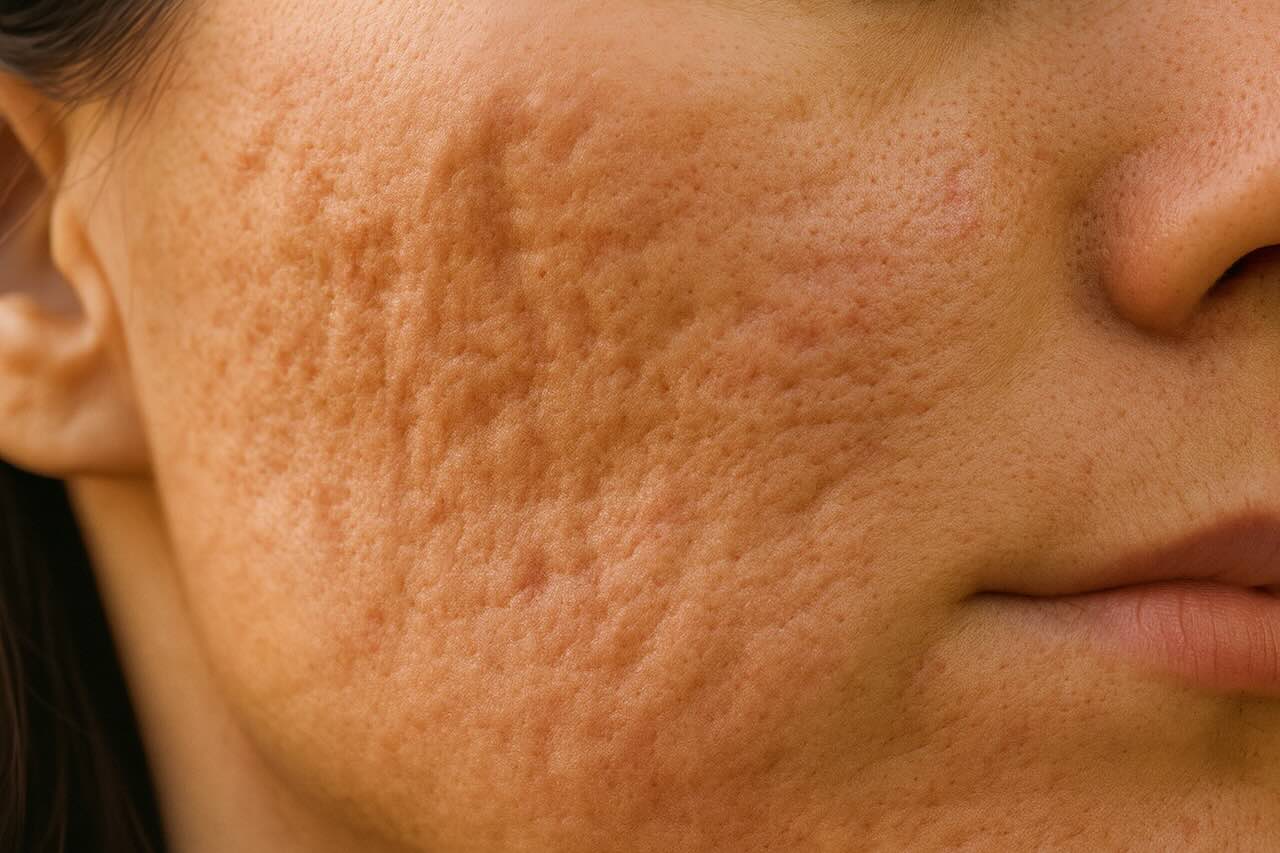
True acne scars are permanent structural changes in the skin. Unlike a temporary pimple, a scar represents a “mishap” in the body’s natural healing factory. If the repair process is interrupted or insufficient, you’re left with a change in texture that won’t simply wash away with a cleanser.
Her Clinic, Leading Aesthetic Treatment in Malaysia offers expert acne scar treatment using advanced Pico lasers and subcision, specifically tailored to restore smooth, clear skin for every Malaysian skin profile.
How Acne Scars Develop
When an acne cyst or deep pustule ruptures, it causes a “fire” (inflammation) in the dermis. To put it out, your body produces collagen. If it produces too little collagen, you get a pit (atrophic scar). If it produces too much, you get a raised bump (hypertrophic scar).
Difference Between Acne Marks and Acne Scars
This is where most people get confused.
Acne Marks: Flat spots of color. They are smooth to the touch.
Acne Scars: Pitted or raised. They change the actual “terrain” of your skin.
Post-Inflammatory Hyperpigmentation vs True Scarring
In Malaysia’s diverse skin tones, Post-Inflammatory Hyperpigmentation (PIH) is incredibly common. These are dark brown or black spots left behind after a breakout. While they look frustrating, they aren’t “true” scars because the skin texture remains flat. PIH in Asian skin often requires brightening agents or Pico lasers rather than deep resurfacing.
Main Types of Atrophic Acne Scars
Ice Pick Scars

These are the “ninjas” of acne scars—small, narrow, but incredibly deep. They look like the skin has been punctured by a tiny ice pick. Because they reach deep into the dermis, they are often the most difficult to treat with standard lasers alone.
Boxcar Scars

Think of these as “craters.” They are broad depressions with sharp, vertical edges (like a box). They can be shallow or deep and are typically found on the cheeks and temples where the skin is thicker.
Rolling Scars

These create a “wavy” or undulating texture. They happen when fibrous bands of tissue pull the skin down from the deeper layers. If you stretch your skin and the scar disappears, it’s likely a rolling acne scar.
Hypertrophic and Keloid Acne Scars
Hypertrophic Scars
These are raised, firm bumps that stay within the boundary of the original pimple. They are common on the jawline, back, and chest.
Keloid Scars

Similar to hypertrophic scars but more aggressive, keloids grow larger than the original acne site. They can be itchy, painful, and are caused by an overproduction of scar tissue.
Risk Factors in Asian Skin Types
Asian skin has a higher density of melanin and a different fibroblast response, making us more prone to keloids and PIH. This is why “aggressive” treatments must be handled carefully by experts to avoid worsening the pigment.
Acne Scar Severity Classification
Mild Acne Scarring
Mostly flat marks (PIH/PIE) and very shallow depressions that can be easily hidden with light makeup or a tinted sunscreen.
Moderate Acne Scarring
Visible indentations (like boxcar or rolling scars) that are obvious under “harsh” top-down lighting but can be flattened if you manually stretch the skin.
Severe Acne Scarring
Deep, anchored scars that do not change when the skin is stretched. These often involve “Grade 4” scarring, where multiple types (ice pick + boxcar) overlap.
How to Identify Your Acne Scar Type
Visual Characteristics of Each Scar Type
Ice Pick: Deep “pores” that don’t close.
Boxcar: Oval/Square pits with defined walls.
Rolling: Wavy shadows on the skin.
Hypertrophic: Skin-colored or reddish “lumps.”
Professional Skin Assessment in Malaysia
In 2026, many clinics in KL and Selangor use 3D skin analysis (like VISIA) to measure the exact depth of your scars. This ensures you aren’t paying for a treatment that’s too shallow for your specific scar depth.
Importance of Accurate Diagnosis
Treating a rolling scar with a treatment meant for ice pick scars is like using a screwdriver on a nail—it just won’t work. A correct diagnosis saves you time and thousands of Ringgit.
Best Treatments Based on Types of Acne Scars
Laser Treatment for Atrophic Scars
Fractional CO2 Lasers and Erbium:YAG are the heavy hitters for boxcar scars. They vaporize the “edges” of the scar to blend them into the surrounding skin.
Subcision for Rolling Scars
Since rolling scars are pulled down by internal “anchors,” a doctor must use a tiny needle to perform subcision, snip those bands, and let the skin float back to the surface.
TCA CROSS for Ice Pick Scars
The TCA CROSS technique involves dropping high-strength acid into the base of ice pick scars to “weld” them shut from the bottom up.
Dermal Fillers for Boxcar Scars
Hyaluronic acid or collagen-stimulating fillers (like PLLA) can instantly lift depressed boxcar scars, though the results for HA fillers are temporary (6–12 months).
Steroid Injections for Hypertrophic & Keloid Scars
Intralesional steroid shots are the gold standard to “flatten” raised scars by breaking down the excess collagen.
Factors Affecting Acne Scar Formation in Malaysia
Skin Type and Genetics
If your parents had deep scarring, your skin’s “healing blueprint” might be predisposed to it too.
Delayed Acne Treatment
The longer “active” acne stays inflamed on your face, the higher the chance it will melt the underlying collagen and leave a permanent hole.
Picking and Squeezing Pimples
We’ve all done it, but “popping” a pimple forces bacteria and debris deeper into the dermis, turning a 3-day blemish into a 3-year scar.
Prevention of Different Types of Acne Scars
Early Acne Management
Don’t wait for a “crisis.” Treat inflammatory papules early with benzoyl peroxide or see a pro for a medical-grade facial.
Proper Skincare Routine
Use a gentle cleanser and non-negotiable SPF 50. The Malaysian sun darkens scars and slows down the healing of the skin barrier.
When to See a Dermatologist
If you have “nodulocystic” acne (hard, painful lumps under the skin), OTC creams won’t work. You need professional intervention to prevent permanent scarring before it starts.
Frequently Asked Questions About Types of Acne Scars
Are Acne Scars Permanent?
Without clinical treatment, yes. While they may soften over a decade, the structural “pit” usually requires professional help to fill or resurface.
Which Scar Type Is Hardest to Treat?
Ice pick scars are notoriously stubborn because they are so deep. They usually require a combination of TCA CROSS and lasers.
Can Multiple Scar Types Occur Together?
Absolutely. Most people have “mixed scarring”—a combination of rolling and boxcar scars across their cheeks.
